
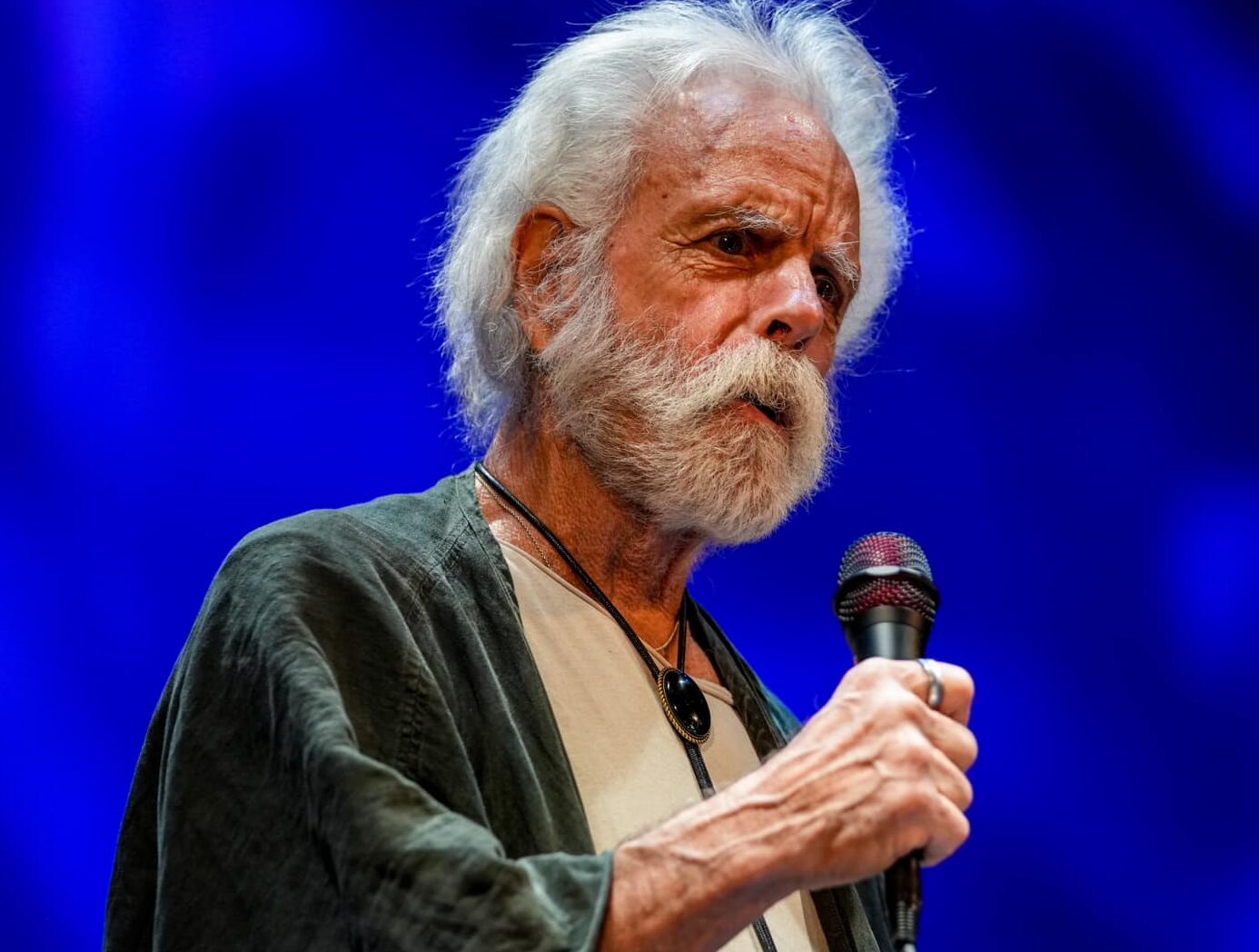
Bob Weir is a legendary American musician, rhythm guitarist, and founding member of the iconic rock band Grateful Dead. Known for his innovative guitar playing and distinctive songwriting style, Weir helped shape the sound of psychedelic rock and jam band music for over six decades.
From his early days in San Francisco’s counterculture scene to his recent work with Dead & Company, Bob Weir’s influence on American music remains unmatched. Sadly, the world lost this musical icon on January 10, 2026, at age 78.
Table of Contents
Bob Weir Quick Bio
| Full Name | Robert Hall Weir |
|---|---|
| Stage Name | Bob Weir |
| Date of Birth | October 16, 1947 |
| Date of Death | January 10, 2026 |
| Age at Death | 78 years old |
| Birthplace | San Francisco, California, USA |
| Nationality | American |
| Profession | Musician, Songwriter, Rhythm Guitarist |
| Height | 6 feet (183 cm) |
| Weight | Approximately 175 lbs (79 kg) |
| Net Worth | $60 Million (at time of death) |
| Spouse | Natascha Münter (married 1999) |
| Children | 2 daughters (Shala Monet, Chloe Kaelia) |
| Famous For | Co-founder of Grateful Dead, Dead & Company |
| Genres | Rock, Folk Rock, Psychedelic Rock, Country Rock |
| Instruments | Guitar, Vocals |
| Years Active | 1964-2025 (61 years) |
| Notable Songs | “Sugar Magnolia,” “Truckin’,” “Playing in the Band” |
| Awards | Rock & Roll Hall of Fame, Grammy Lifetime Achievement, Kennedy Center Honors |
| Social Media | Instagram: @bobweir Facebook: @BobWeir |
Who is Bob Weir?
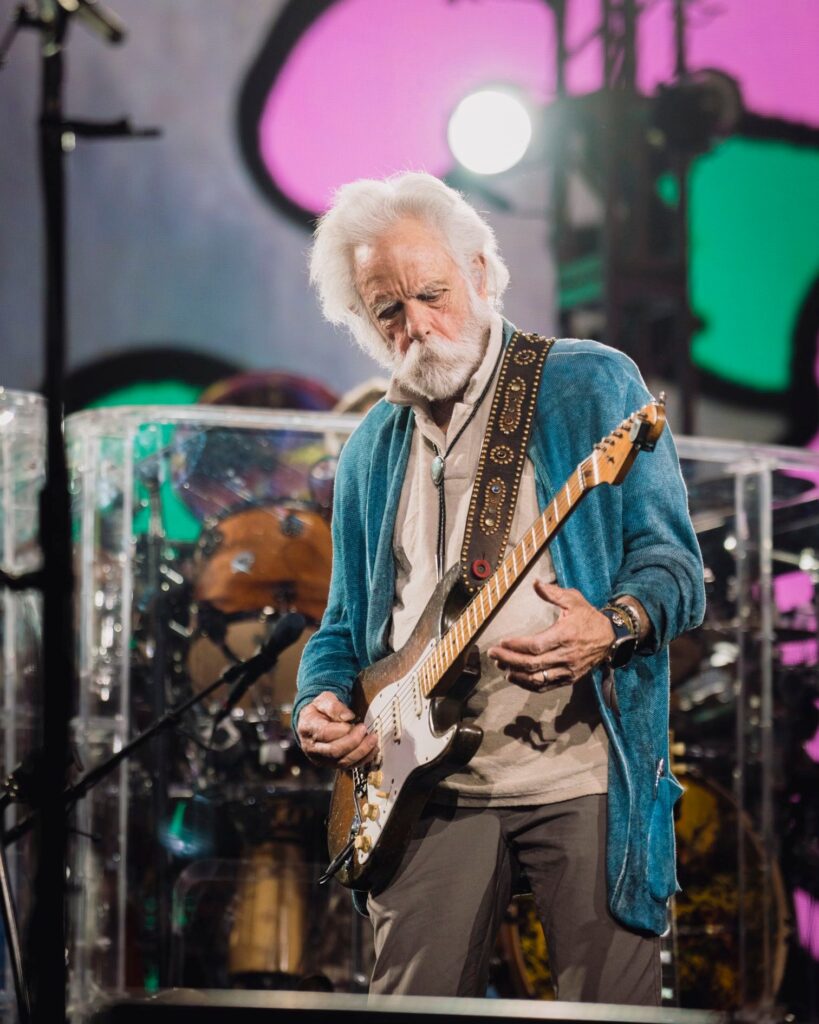
Bob Weir, born Robert Hall Weir on October 16, 1947, in San Francisco, California, was one of the most influential rhythm guitarists in rock history. As a co-founder of the Grateful Dead, Weir spent more than 30 years touring and recording with the band, creating a musical legacy that continues to inspire new generations of musicians and fans.
Unlike traditional rhythm guitarists who simply strum chords, Weir developed a unique playing style characterized by unconventional chord voicings, jazz-influenced timing, and intricate counter-melodies. His approach complemented Jerry Garcia’s lead guitar work perfectly, creating the distinctive Grateful Dead sound that fans worldwide came to love.
Beyond his guitar skills, Bob Weir was a talented songwriter who penned some of the Dead’s most beloved songs, including “Sugar Magnolia,” “Truckin’,” “Playing in the Band,” “The Other One,” and “Cassidy.” His contributions helped the Grateful Dead become one of the most successful touring bands in music history.
Early Life and Childhood
Bob Weir’s early life was marked by challenges that would shape his character and musical journey. Born in San Francisco, he was given up for adoption shortly after birth by his biological parents. He was raised by adoptive parents in Atherton, an affluent suburb in the Bay Area.
Struggles with Education
From a young age, Weir faced significant academic difficulties due to undiagnosed dyslexia. This learning disability made traditional schooling extremely challenging for him. According to his own accounts, he struggled badly in school and experienced repeated disciplinary problems that led to multiple expulsions.
Bob Weir was removed from nearly every school he attended during his childhood. These educational setbacks could have derailed his future, but instead, they pushed him toward music as both an outlet and a lifeline.
Discovery of Music
After briefly attempting piano and trumpet, Weir picked up the guitar at age 13. The instrument immediately resonated with him, providing an escape from academic struggles and a way to express himself. He gravitated toward folk and bluegrass music, spending considerable time at the Tangent, a Palo Alto folk club that served as a hub for the Bay Area’s emerging countercultural musicians.
During his teenage years, Weir attended a Colorado boarding school for boys with behavioral issues. There, he befriended John Perry Barlow, who would later become his most important lyricist and creative partner, co-writing many of the Grateful Dead’s most memorable songs.
The Formation of Grateful Dead
The story of how Bob Weir joined the Grateful Dead is almost mythical in rock history. On New Year’s Eve 1964, the 16-year-old Weir was walking past Dana Morgan’s Music Store in Palo Alto when he heard banjo music drifting from inside. Curious, he walked in and met Jerry Garcia, who was waiting for students who never showed up.
Meeting Jerry Garcia
That fateful meeting changed both their lives. Weir and Garcia spent the entire night playing music together, instantly connecting through their shared passion. They quickly decided to form a band, beginning with the acoustic group Mother McCree’s Uptown Jug Champions.
The jug band soon evolved into the electric Warlocks, which shortly thereafter adopted the name Grateful Dead. At just 17 years old, Bob Weir became one of the founding members of what would become one of the most influential rock bands in history.
Early Challenges
Being the youngest member of the Grateful Dead wasn’t always easy. In 1968, Weir and keyboardist Ron “Pigpen” McKernan were briefly dismissed from the band due to concerns about their musicianship. The other band members felt they needed to raise the musical bar.
This dismissal, though it lasted only months, proved to be a turning point for Weir. Rather than giving up, he recommitted himself to mastering the guitar. He developed his idiosyncratic rhythm style built around unusual chord voicings, jazz-influenced timing, and counter-melodies rather than traditional strumming patterns.
When Weir returned to the band, he came back stronger and more focused. His unique approach to rhythm guitar would become essential to the Grateful Dead’s signature sound.
Career with the Grateful Dead (1965-1995)
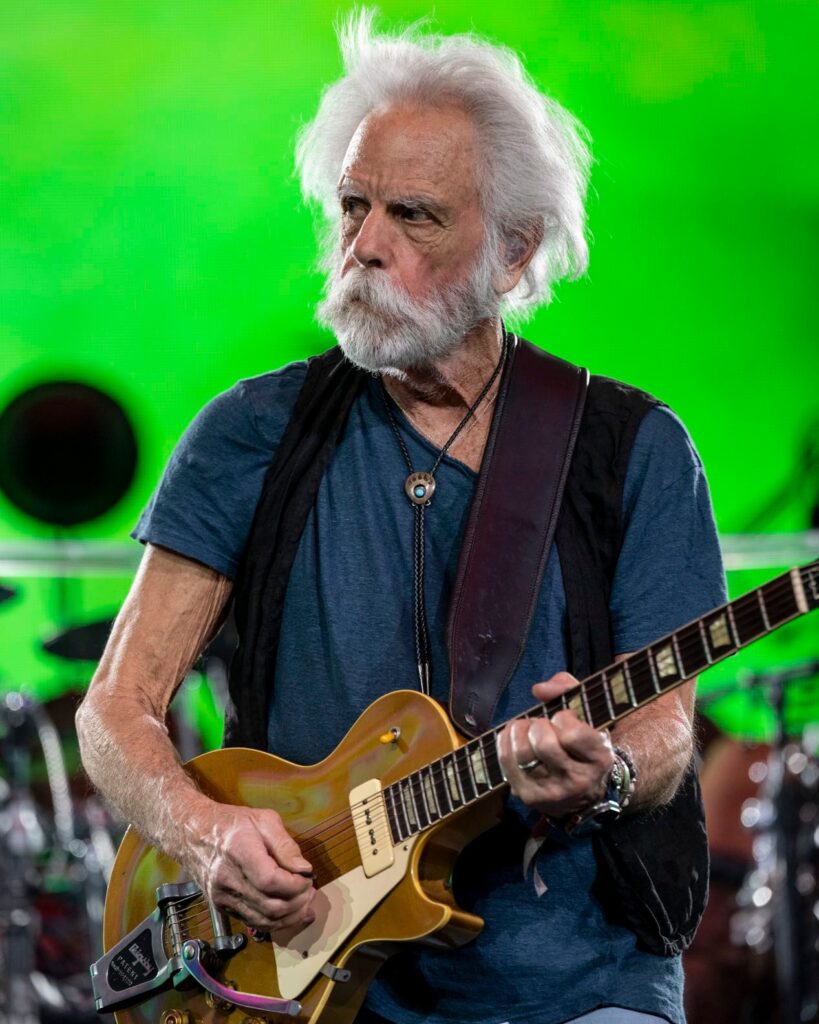
For three decades, Bob Weir served as the Grateful Dead’s rhythm guitarist, co-lead vocalist, and second most prolific songwriter after Jerry Garcia. His contributions were fundamental to the band’s success and longevity.
Musical Contributions
While Jerry Garcia was often viewed as the band’s spiritual and musical center, Weir functioned as its structural anchor. His rhythm guitar work provided the foundation that allowed the band’s improvisational flights to soar while maintaining coherence.
Weir’s playing style was revolutionary. Instead of simply providing rhythmic support, he wove intricate melodic lines that interacted with Garcia’s lead playing. This created a musical conversation between the two guitarists that became a hallmark of the Grateful Dead’s live performances.
Songwriting Success
Bob Weir wrote or co-wrote many of the Grateful Dead’s most enduring songs:
“Sugar Magnolia” – A upbeat, joyful celebration that became a concert staple “Truckin'” – The band’s unofficial anthem about life on the road “Playing in the Band” – A vehicle for extended improvisation “The Other One” – A psychedelic journey showcasing the band’s experimental side “Cassidy” – A beautiful, contemplative ballad “Looks Like Rain” – A country-tinged emotional powerhouse “Jack Straw” – A narrative song about outlaws and friendship
Most of Weir’s lyrics were written in collaboration with John Perry Barlow, his longtime friend from boarding school. Their partnership produced some of the most poetic and memorable lyrics in rock music.
Classic Albums
Bob Weir played a crucial role in the Grateful Dead’s most celebrated albums:
“Workingman’s Dead” (1970) – Featured Weir’s country-rock sensibilities “American Beauty” (1970) – Showcased his songwriting maturity “Europe ’72” (1972) – Captured the band’s improvisational peak “Wake of the Flood” (1973) – The first album on their own label
These albums showcased Weir’s ability to merge folk, country, and rock into songs that felt both timeless and innovative.
The Dead’s Culture and Community
Beyond the music, Bob Weir helped cultivate the Grateful Dead’s unique relationship with their fanbase. The “Deadheads,” as fans were known, followed the band from city to city, creating a traveling community unlike anything else in rock music.
The band’s decision to allow fans to tape their concerts was revolutionary and helped spread their music organically. Weir embraced this community spirit, understanding that the Grateful Dead were more than just a band—they were a cultural phenomenon.
Solo Work and Side Projects
Throughout his career with the Grateful Dead, Bob Weir maintained an active solo career and participated in numerous side projects. This allowed him to explore musical directions that didn’t always fit within the Dead’s framework.
Solo Albums
“Ace” (1972) – Weir’s debut solo album featured full participation from the Grateful Dead and produced the enduring live staple “Playing in the Band.” Though credited as a solo record, it essentially functioned as a Grateful Dead album.
“Heaven Help the Fool” (1978) – A more polished, pop-rock influenced effort that showcased Weir’s versatility as a songwriter and vocalist.
“Blue Mountain” (2016) – His first album of entirely new material in 30 years, this “cowboy folk” record was inspired by his youth working as a ranch hand in Wyoming. The album received widespread critical acclaim and proved Weir could still create compelling, relevant music decades into his career.
Kingfish
In the mid-1970s, while the Grateful Dead was less active, Weir formed Kingfish, a side project that allowed him to explore a more straightforward rock sound. The band released several albums and toured extensively, giving Weir an outlet for his creative energy during the Dead’s quieter periods.
Bobby and the Midnites
In the early 1980s, Weir formed Bobby and the Midnites, a rock band that featured jazz fusion influences. Though the project was short-lived, it demonstrated Weir’s willingness to experiment with different musical styles and collaborate with musicians outside the Grateful Dead’s orbit.
RatDog
Following Jerry Garcia’s death in 1995, Bob Weir formed RatDog, which became his primary musical vehicle for over 15 years. The band allowed Weir to continue performing Grateful Dead songs while also exploring new material and musical directions.
RatDog toured extensively from 1995 to 2014, maintaining the improvisational spirit of the Grateful Dead while establishing its own identity. The band featured various lineups over the years but consistently delivered high-energy performances that satisfied both Deadheads and new fans.
Life After Jerry Garcia
When Jerry Garcia died on August 9, 1995, the Grateful Dead era officially ended. For Bob Weir and the surviving members, this presented both a profound loss and a question: What comes next?
Keeping the Music Alive
Rather than letting the Grateful Dead’s music fade into history, Weir became one of the principal stewards of the band’s legacy. He understood that the music and the community it created were too important to simply archive.
The Other Ones and Furthur
In 1998, Weir joined with fellow Dead members Phil Lesh, Mickey Hart, and Bill Kreutzmann to form The Other Ones. The band toured sporadically, performing Grateful Dead songs with various guest musicians filling the void left by Garcia.
In 2009, Weir and Phil Lesh co-founded Furthur, which toured extensively through 2014. Furthur earned a reputation for adventurous setlists and extended improvisation, staying true to the Grateful Dead’s experimental spirit.
Health Challenges
In the early 2010s, Weir faced significant health challenges. In 2013, he collapsed onstage during a performance, forcing him to take a hiatus from touring. In 2014, he underwent surgery and recovery, temporarily stepping away from music.
These health setbacks reminded fans of Weir’s mortality, but they also demonstrated his resilience. When he returned to performing, he did so with renewed energy and commitment.
Dead & Company: A New Chapter
In 2015, the surviving members of the Grateful Dead reunited for the band’s 50th anniversary concerts at Soldier Field in Chicago. These shows, known as “Fare Thee Well,” drew massive crowds and proved there was still tremendous interest in the Grateful Dead’s music.
Formation and Success
This reunion paved the way for Dead & Company, formed later in 2015. The band paired Bob Weir, Mickey Hart, and Bill Kreutzmann with John Mayer on lead guitar, Oteil Burbridge on bass, and Jeff Chimenti on keyboards.
Initially, many Deadheads were skeptical about John Mayer, known primarily as a pop artist, taking on Jerry Garcia’s role. However, Mayer’s respectful approach and genuine love for the music won over doubters. His blues-rock guitar style complemented Weir’s rhythm playing beautifully.
Dead & Company became one of the most successful touring acts of the 21st century, consistently selling out stadiums and amphitheaters across North America. Summer tours with Dead & Company became annual events that brought together multiple generations of fans.
The Sphere Residency
In 2024, Dead & Company announced a residency at the Sphere in Las Vegas, the state-of-the-art entertainment venue known for its massive wraparound screen and cutting-edge audio technology.
The Sphere shows utilized groundbreaking visual technology to bring the Grateful Dead’s psychedelic legacy into a new era. Fans experienced immersive visuals that enhanced the music in ways never before possible, creating a 21st-century version of the acid tests that birthed the Dead in the 1960s.
These performances represented the culmination of Weir’s vision: honoring the past while embracing the future.
Bobby Weir & Wolf Bros
In 2018, Bob Weir launched another project: Bobby Weir & Wolf Bros. This acoustic trio featured bassist Don Was and drummer Jay Lane, reimagining the Grateful Dead’s catalog with sophisticated, stripped-down arrangements.
The Wolf Bros often expanded to include a brass and string section known as “The Wolfpack,” which added orchestral elements to the music. This approach allowed Weir to explore the Grateful Dead’s songs from new angles, highlighting their melodic and lyrical strengths.
In 2022, Wolf Bros released “Live in Colorado,” a double album that captured the band’s dynamic live performances. The album demonstrated that even after six decades in music, Weir could still surprise audiences with fresh interpretations of familiar songs.
Bob Weir Net Worth
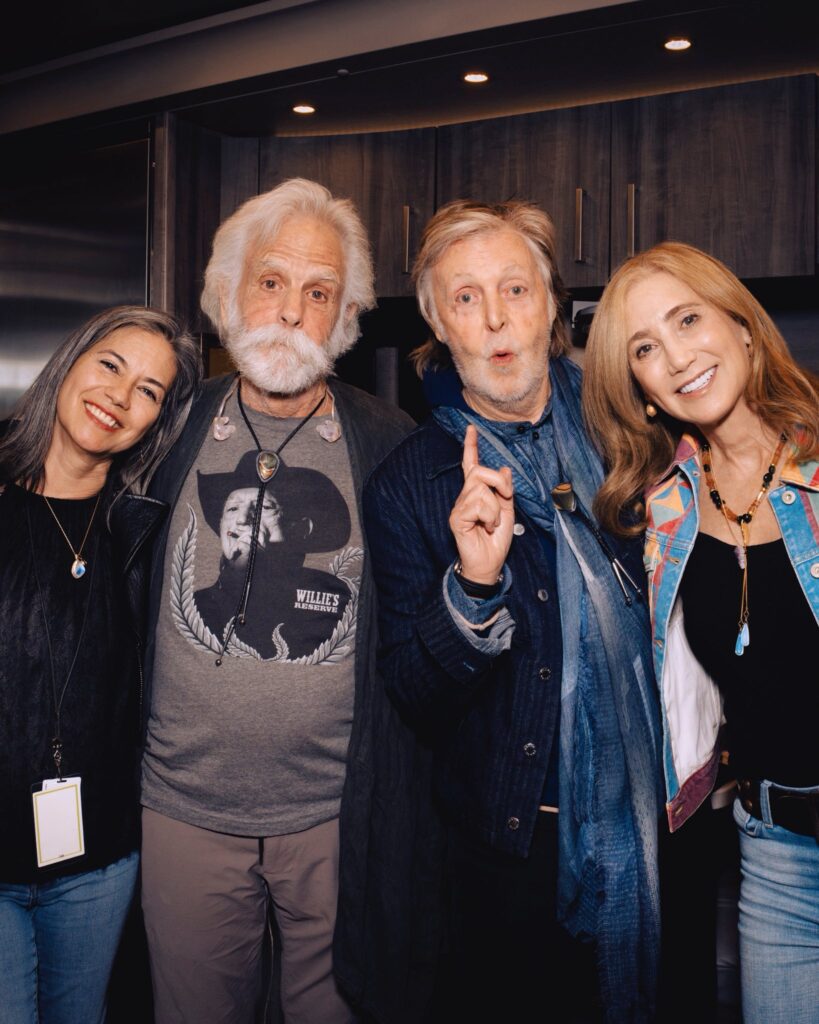
At the time of his death in January 2026, Bob Weir had accumulated a net worth of approximately $60 million. This wealth came from multiple sources spanning his six-decade career.
Income Sources
Grateful Dead Royalties – As a founding member and primary songwriter, Weir earned ongoing royalties from album sales, streaming, and licensing deals.
Touring Revenue – Decades of constant touring with various projects generated substantial income. Dead & Company’s stadium tours were particularly lucrative.
Merchandise and Licensing – The Grateful Dead’s merchandising empire continued to generate revenue long after the band stopped touring.
Real Estate Investments – Weir owned multiple properties in Northern California and Los Angeles.
Publishing Rights – His songwriting catalog provided steady passive income.
Comparison to Other Dead Members
Jerry Garcia’s estate was worth approximately $15 million at the time of his death in 1995, significantly less than Weir’s $60 million. This difference reflected Weir’s continued active touring and careful financial management over the additional 30 years he lived and worked.
Phil Lesh’s net worth is estimated at around $50 million, while Mickey Hart is worth approximately $40 million, and Bill Kreutzmann around $25 million.
How Old Was Bob Weir?
Bob Weir was 78 years old when he passed away on January 10, 2026. He was born on October 16, 1947, giving him a lifespan of 78 years and 86 days.
Age Milestones
- Age 17 – Founded the Grateful Dead (1965)
- Age 25 – Released “Workingman’s Dead” and “American Beauty” (1970)
- Age 47 – Jerry Garcia died; formed RatDog (1995)
- Age 67 – Formed Dead & Company (2015)
- Age 76 – Performed at the Sphere in Las Vegas (2024)
- Age 78 – Passed away (2026)
Throughout his life, Weir remained remarkably active and engaged with music. Even in his final years, he maintained a rigorous touring schedule that would challenge musicians half his age.
Bob Weir Height and Physical Appearance
Bob Weir stood approximately 6 feet tall (183 cm) with a lean, athletic build that he maintained throughout most of his life. His distinctive physical appearance became part of his rock star image.
Signature Look
In his younger years, Weir was known for his long, flowing hair, often worn loose or in a ponytail. His handsome features and California surfer-boy looks made him popular with fans, particularly women who formed a significant portion of the Grateful Dead’s audience.
As he aged, Weir’s hair turned silver-grey, which he wore shorter but still with length. His style evolved from 1960s hippie to a more refined but still casual aesthetic that reflected his Bay Area roots.
Physical Fitness
Unlike many rock musicians who struggled with their health, Weir maintained an active lifestyle. He enjoyed outdoor activities, including horseback riding, which connected to his love of the American West and cowboy culture.
Even into his 70s, Weir remained physically capable of handling the demands of touring, standing and performing for two to three hours per night multiple times per week.
Personal Life: Wife and Family
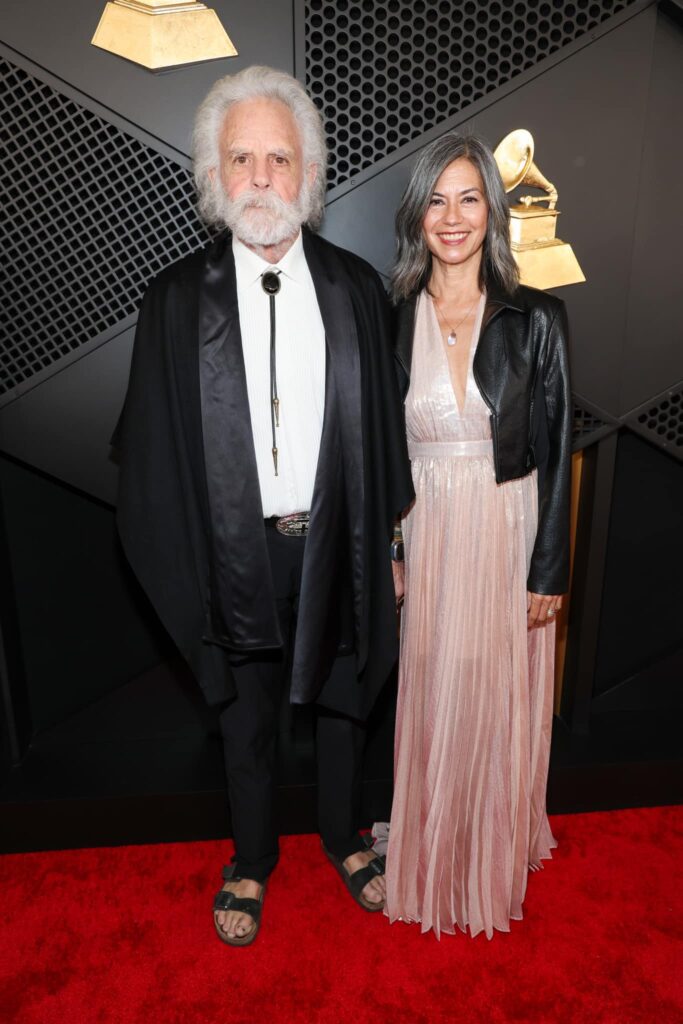
Bob Weir married Natascha Münter in 1999 after several years of dating. Their relationship provided Weir with personal stability that complemented his professional success.
His Wife: Natascha Münter
Natascha Münter, born in Germany, became Weir’s partner in both life and business. She helped manage various aspects of his career and supported his musical endeavors. The couple maintained a relatively private personal life despite Weir’s public profile.
Children
Bob and Natascha had two daughters:
Shala Monet Weir – Their older daughter Chloe Kaelia Weir – Their younger daughter, who became a professional photographer
Chloe frequently documented her father’s later tours, providing fans with intimate behind-the-scenes looks at life on the road with Bob Weir. Her photography captured both the public performances and private moments, creating a valuable visual record of her father’s final years of touring.
Reconnecting with Biological Family
Later in life, Bob Weir reconnected with his biological father, an experience he described as both grounding and emotionally complex. He purchased a home in Mill Valley for his biological father, demonstrating his generosity and desire to build a relationship that had been absent during his childhood.
Private Nature
Despite being a public figure for six decades, Weir managed to keep much of his personal life private. He rarely discussed his family in interviews, preferring to focus on music. This boundary between public and private life allowed his family some normalcy despite his fame.
Social Media Presence
Unlike many contemporary musicians, Bob Weir maintained a relatively modest social media presence, reflecting his generation’s relationship with technology and privacy.
Official Accounts
Facebook – @BobWeir (verified) – Approximately 500,000+ followers Instagram – @bobweir (verified) – Around 300,000+ followers Twitter/X – @BobWeir (verified) – Roughly 200,000+ followers
Content Strategy
Weir’s social media accounts primarily featured:
- Tour announcements and ticket information
- Photos from performances
- Occasional throwback images from Grateful Dead days
- Environmental and social causes he supported
- Collaborations with other musicians
Rather than posting daily personal updates, Weir’s social media served primarily as a communication tool with fans about his professional activities.
Digital Legacy
The Dead & Company and official Grateful Dead accounts maintain much larger followings, with millions of combined followers across platforms. These accounts continue to share archival footage, announce releases, and keep the community engaged.
Awards and Honors
Throughout his career, Bob Weir received numerous awards and honors recognizing his contributions to American music.
Rock & Roll Hall of Fame
In 1994, the Grateful Dead was inducted into the Rock & Roll Hall of Fame. This recognition acknowledged the band’s profound impact on rock music and American culture.
Grammy Lifetime Achievement Award
In 2007, the Grateful Dead received a Grammy Lifetime Achievement Award, honoring their enduring influence and innovation in music.
Kennedy Center Honors
In 2024, Bob Weir was named a Kennedy Center Honoree as part of the institution’s 47th class. This prestigious award recognized his lifetime contributions to American culture through the performing arts.
MusiCares Person of the Year
In 2025, just months before his death, the Grateful Dead was honored as the MusiCares Persons of the Year. This award recognized not only their musical achievements but also their philanthropic efforts and support for fellow musicians.
Environmental and Social Activism
Bob Weir used his platform to advocate for causes he believed in, continuing the Grateful Dead’s tradition of social consciousness.
HeadCount
Weir was a longtime supporter of HeadCount, a non-partisan organization that registers voters at concerts. The Grateful Dead’s culture of political engagement continued through Weir’s support of this organization.
Environmental Causes
Weir supported various environmental organizations, reflecting his love of nature and concern about climate change. He participated in benefit concerts and used his social media to raise awareness about environmental issues.
Music Education
In his later years, Weir became increasingly interested in music education, supporting programs that provided instruments and instruction to underprivileged youth.
The Final Year and Death
In July 2025, Bob Weir was diagnosed with cancer. He battled the disease while continuing to perform, keeping his diagnosis private from all but his closest family and friends.
Final Performances
Weir’s final performances with Dead & Company at the Sphere in Las Vegas in late 2024 and early 2025 proved to be a fitting conclusion to his remarkable career. These shows demonstrated his commitment to pushing musical boundaries even as his health declined.
Passing
On January 10, 2026, Bob Weir passed away at age 78. According to his family, while he had successfully battled cancer, he ultimately succumbed to underlying lung issues. He died peacefully, surrounded by loved ones.
Bob Weir Death Reason: What Caused His Passing?
Bob Weir’s death was caused by complications from lung disease, according to official statements from his family. While he had been diagnosed with cancer in July 2025 and successfully underwent treatment, the underlying respiratory issues proved fatal.
Primary Cause of Death:
- Lung-related complications (chronic respiratory condition)
- Exacerbated by decades of touring and performing in various environments
- Despite successful cancer treatment, his lungs could not fully recover
Contributing Factors:
- Age: At 78, natural aging affected his body’s ability to recover
- Decades of performing: Six decades of constant touring took a physical toll
- Previous health scares: Collapsed onstage in 2013, requiring medical intervention
- Cancer treatment impact: While the cancer was treated successfully, the treatments weakened his overall health
Timeline of Health Decline:
- July 2025: Cancer diagnosis announced privately to family
- August-December 2025: Underwent treatment while continuing limited performances
- January 2026: Respiratory complications worsened
- January 10, 2026: Passed away peacefully at home with family present
Unlike many rock stars who died from drug overdoses or accidents, Bob Weir’s death was a natural progression of age-related health issues. He maintained a relatively healthy lifestyle compared to many of his peers, which allowed him to perform actively into his late 70s.
His family emphasized that he was surrounded by loved ones in his final moments, and he faced death with the same grace and philosophical outlook that characterized his entire life. Weir had previously stated he viewed death not as an ending, but as a natural transition.
The music community mourned the loss of a true legend who had given six decades of extraordinary performances and helped shape American music history.
His Final Words on Death
In his final months, Weir remained philosophical about mortality. He famously described death as “the last and best reward for a life well-lived,” reflecting the spiritual perspective that had characterized much of his life and work.
This perspective aligned with the Grateful Dead’s long-standing engagement with themes of mortality, transformation, and the cyclical nature of life—concepts that appeared frequently in their lyrics and performance philosophy.
Industry Reaction
News of Weir’s death prompted an outpouring of tributes from across the music industry. Fellow musicians, fans, and cultural figures celebrated his life and contributions to American music.
John Mayer posted a heartfelt tribute calling Weir “a teacher, a friend, and a guardian of a musical language that changed everything.”
Phil Lesh shared memories of their 60-year friendship and musical partnership, stating “Bob was the rhythm to my bass, the harmony to my melody.”
Mickey Hart honored his bandmate, saying “We didn’t just play music together—we lived it, breathed it, and became it.”
Thousands of fans gathered at impromptu memorials outside venues where the Grateful Dead had performed, playing their music and sharing stories about how Weir’s songs had impacted their lives.
The official Grateful Dead social media accounts shared archival photos and videos, celebrating Weir’s life and inviting fans to share their memories using the hashtag #BobWeirForever.
Musical Legacy and Influence
Bob Weir’s influence on music extends far beyond his work with the Grateful Dead. His innovative rhythm guitar style influenced countless musicians across multiple genres.
Guitar Innovation
Weir’s approach to rhythm guitar—emphasizing melody, counter-rhythm, and unconventional voicings—challenged traditional rock guitar conventions. Many contemporary guitarists cite Weir as an influence on their playing.
Jam Band Movement
The jam band movement of the 1990s and 2000s traced its roots directly to the Grateful Dead’s improvisational approach. Bands like Phish, Widespread Panic, and String Cheese Incident all acknowledged the Dead’s influence, and by extension, Weir’s contributions.
Songwriting Impact
Weir’s songs demonstrated that rock music could incorporate literary lyrics, complex structures, and diverse American musical traditions. His collaboration with John Perry Barlow produced lyrics that were both poetic and accessible.
Equipment and Gear
Throughout his career, Bob Weir used various guitars and equipment that contributed to his distinctive sound.
Guitars
Ibanez Bob Weir Model – A signature model that Weir played extensively in the 1970s and 1980s Gibson ES-335 – Used during the Grateful Dead’s early years Custom D’Angelico Guitars – Featured in his later work with Wolf Bros Travis Bean TB1000S – An aluminum-necked guitar used in the mid-1970s
Amplifiers and Effects
Weir favored clean, bright tones that allowed his complex chord work to shine through. He used various amplifiers over the years, including:
- Mesa/Boogie amplifiers
- McIntosh amplifiers
- Custom-built systems for larger venues
Bob Weir’s Impact on American Culture
Beyond music, Bob Weir and the Grateful Dead influenced American culture in profound ways.
The Counterculture Movement
As part of the Grateful Dead, Weir helped define the 1960s counterculture. The band’s communal ethos, emphasis on experience over commercialism, and integration of Eastern philosophy with Western rock music reflected and shaped the era’s values.
The Touring Economy
The Grateful Dead pioneered many aspects of modern touring, including allowing taping, creating fan communities, and building sustainable touring circuits. These innovations influenced how live music operates today.
Business Model Innovation
The Dead’s approach to their business—maintaining creative control, building direct relationships with fans, and prioritizing experience over profit—provided a model for independent artists in the digital age.
FAQs About Bob Weir
Who was Bob Weir?
Bob Weir was an American musician and co-founder of the Grateful Dead, widely regarded as one of rock’s most innovative rhythm guitarists.
What was Bob Weir famous for?
He was best known for shaping the Grateful Dead’s sound through his unique rhythm guitar style and classic songs like “Sugar Magnolia” and “Truckin’.”
How old was Bob Weir when he died?
Bob Weir passed away on January 10, 2026, at the age of 78.
Was Bob Weir part of Dead & Company?
Yes, he co-founded Dead & Company in 2015 and toured with the band into his late 70s.
What was Bob Weir net worth?
At the time of his death, Bob Weir’s net worth was estimated at around $60 million.
Conclusion
Bob Weir spent nearly 61 years making music, from that fateful meeting with Jerry Garcia in 1964 until his final performances in 2025. His journey from a troubled teenager with dyslexia to a Rock & Roll Hall of Famer demonstrated the transformative power of music and dedication.
Weir’s contributions to American music cannot be overstated. As a rhythm guitarist, he redefined what the instrument could do. As a songwriter, he crafted songs that continue to resonate with audiences decades after their creation. As a bandleader, he kept the Grateful Dead’s music alive and relevant for new generations.
But perhaps most importantly, Bob Weir embodied the spirit that made the Grateful Dead special: a commitment to community, a willingness to take risks, and a belief that music could bring people together in meaningful ways.
His legacy lives on through the countless musicians he influenced, the fans whose lives were enriched by his music, and the recordings that will continue to inspire future generations. Bob Weir didn’t just make music—he helped create a cultural movement that continues to shape American life.
As he once said about the Grateful Dead’s philosophy: “We’re not in the entertainment business. We’re in the transportation business. We move minds.” And for six decades, Bob Weir transported millions of minds to places they’d never been before.